





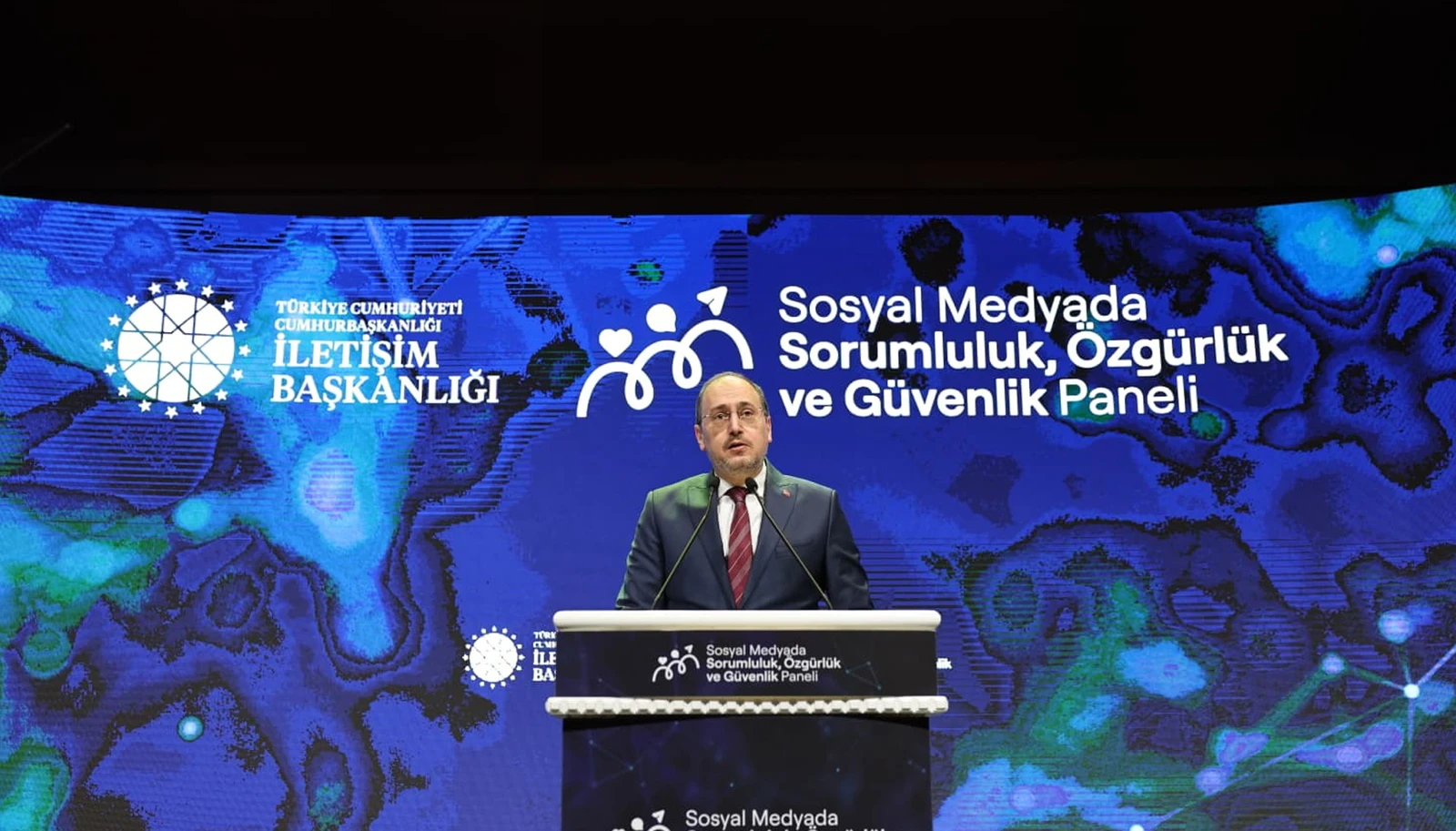
The Social Media Responsibility, Freedom, and Security Panel, organized by the Communications Presidency, took place in Ankara. BTK President Ömer Abdullah Karagözoğlu participated in the panel.
In the opening speech of the panel, Karagözoğlu made important statements regarding social media usage.
Karagözoğlu said, "Regulating the access of children under 15 to social media on the basis of supervision and limitation goes beyond a technical boundary; it carries the meaning of a holistic public policy that protects children within the digital ecosystem."
Stating that an effective communication approach is essential for the correct understanding of child protection policies in public opinion, the formation of societal support, and the reduction of disinformation risks, Karagözoğlu said, "Today, the goal is to create a common ground for evaluation among public institutions, academics, and communication experts and to develop qualified suggestions. In other words, the table established here today is not the table of a single institution; it becomes the common table of society."
President Karagözoğlu: Awareness is the Strongest Security Wall
Referring to BTK's awareness-raising efforts, Karagözoğlu said, "Just setting rules is not enough; it is necessary to explain why those rules exist. At this point, BTK Academy plays a very valuable role. Today, with its user base reaching millions, BTK Academy provides digital literacy, safe internet, cyber awareness, and technology consciousness to children, youth, and parents."
Karagözoğlu said, "I want to emphasize this in particular: awareness is the strongest security wall. Instead of telling children 'prohibited,' teaching 'how to be safe' provides permanent and effective protection. The trainings offered by BTK Academy contribute to the development of healthy individuals in the digital world with exactly this understanding."
Emphasizing that protecting children in the digital age means protecting the future, Karagözoğlu concluded his speech by saying, "We prioritize reducing children's exposure to harmful content, protecting their personal data and privacy, preventing risks such as crime foci and illegal betting, averting psychosocial negativities, and strengthening data security."