





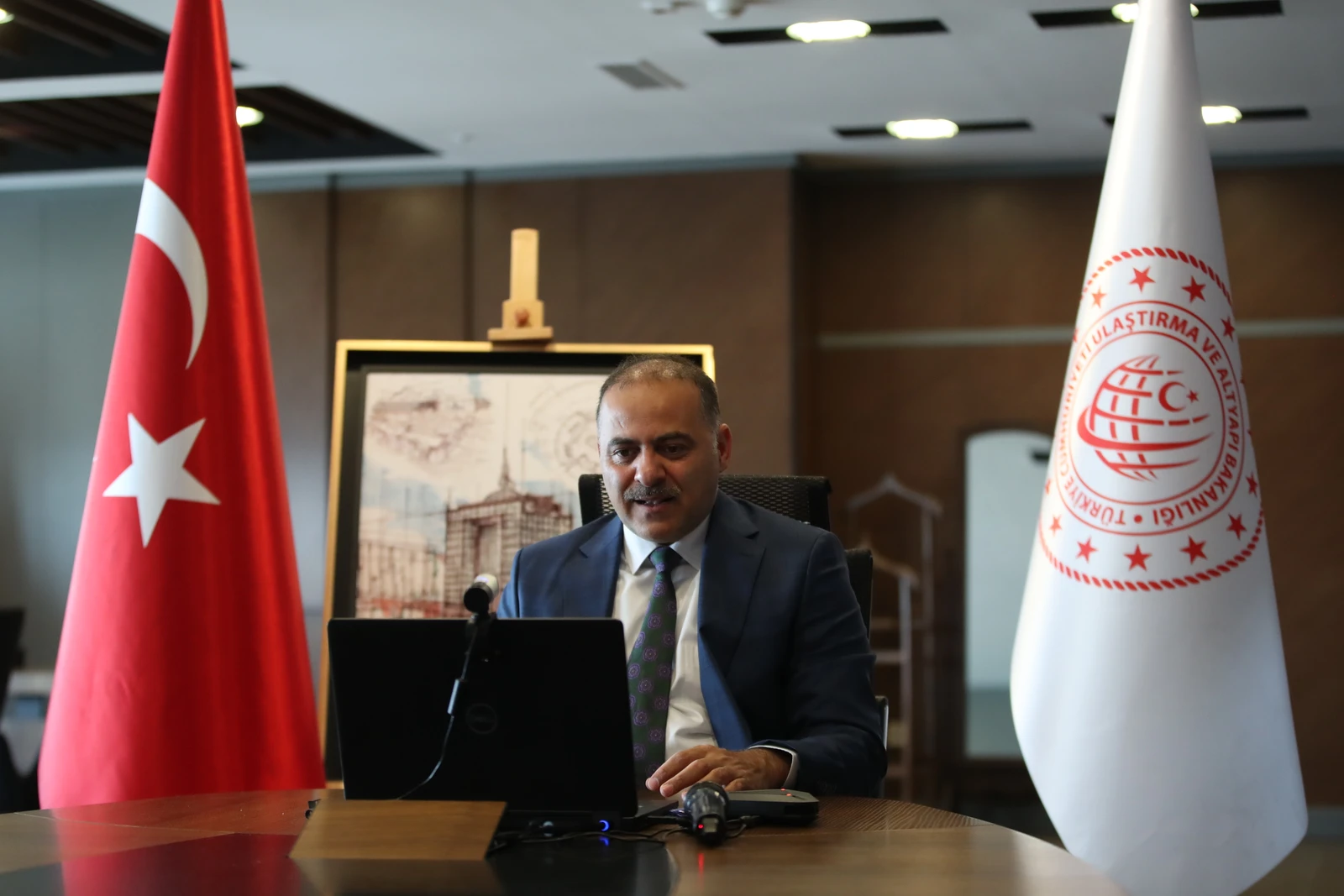
The Forum Istanbul program started this year with the theme “Understanding Tomorrow”. Speaking at the opening of the program, Dr. Ömer Fatih Sayan, Deputy Minister of the Ministry of Transport and Infrastructure, spoke about the power of technology's changing and transformative nature.
The program was held online. Deputy Minister Sayan drew attention to the connection of all new technologies to the internet. Reminding that, according to the official statistics of the International Telecommunication Union, more than half of the world's population uses the internet, Sayan said, “In this regard, data analysis holds great importance for businesses, institutions, and even states. Data usage makes a huge difference in terms of “speed” and “correct decision-making”. In today's world, those who can use data appropriately have the privilege of “determining their own future”. Therefore, processing data and transforming it into added value, as well as developing applications that facilitate human life, are among the top agendas of countries. This situation further highlights the need for software developers in all countries.”
Emphasizing that this situation also increases the need for software, Sayan stated, “The global software sector, which reached a size of 565 billion dollars in 2019, is expected to grow by 5% over the next five years and reach 730 billion dollars by 2024. The software sector is not only strategically positioned due to its mentioned size but also due to the chain reaction it creates in the economy. It is expected that the size of the software sector will reach 4 trillion dollars on a global scale by the end of the next 5 years. In our country, there is significant potential in terms of the software sector. Especially in recent years, we see that the increase in resources allocated to R&D and the ease of access to them have positive effects on high-tech intensive sectors in our country. It would be beneficial to utilize the existing entrepreneurial capacity in the ICT sector more extensively, to further encourage the young population with incentives and supports, and to make them more widespread, thematic, and result-oriented. In this regard, to achieve the 2023 targets, investments in human resources are needed, more companies operating in the ICT sector should be encouraged to be established, supported in public procurements, and domestic product consumption should be promoted, which also form our primary targets,” he explained.
Deputy Minister Sayan: Turkey is Advantageous in the Software Field Thanks to its Young and Dynamic Population
Stating that Turkey has a strong hand in this regard thanks to its young population and competitive cost advantage, Sayan said, “Above all, we need to increase the number of entrepreneurs in the software sector. With our President's National Technology Initiative launched in recent years, the climate formed to produce domestic and national technology brings many opportunities for entrepreneurship. In addition to university-industry collaboration, the incentive and support mechanisms developed by state institutions offer important opportunities for our youth to design and produce domestic and national products in many areas from defense industry to health sector,” he stated.
Indicating that developing human resources in the required quantity and competence for the software sector is among the primary targets, Sayan also mentioned the “1 Million Software Developers” project.
Noting that the pandemic we are in has accelerated the digitalization process, Sayan spoke about its effects as follows: “It has caused the public and private sectors to realize the transformation processes they planned for the long term in the shortest possible time. Research shows that new job categories will emerge in place of the jobs done by 47% of employees. It appears that by 2030, the most needed skills will be digital skills such as ICT and programming. On the other hand, robots have been used in manufacturing industry production lines and routine jobs for 70 years. It is predicted that the share of robots, which currently account for about 10% of world production, could rise to 50% in the coming years. The entry of robots into working life and these major changes have led to the formation of a new class of workers called “metal collars”. In this process, great responsibilities will fall on us, who manage the robots we call “metal collars.”
Deputy Minister Sayan concluded his speech by also mentioning the importance of cybersecurity.