




11.5.2017
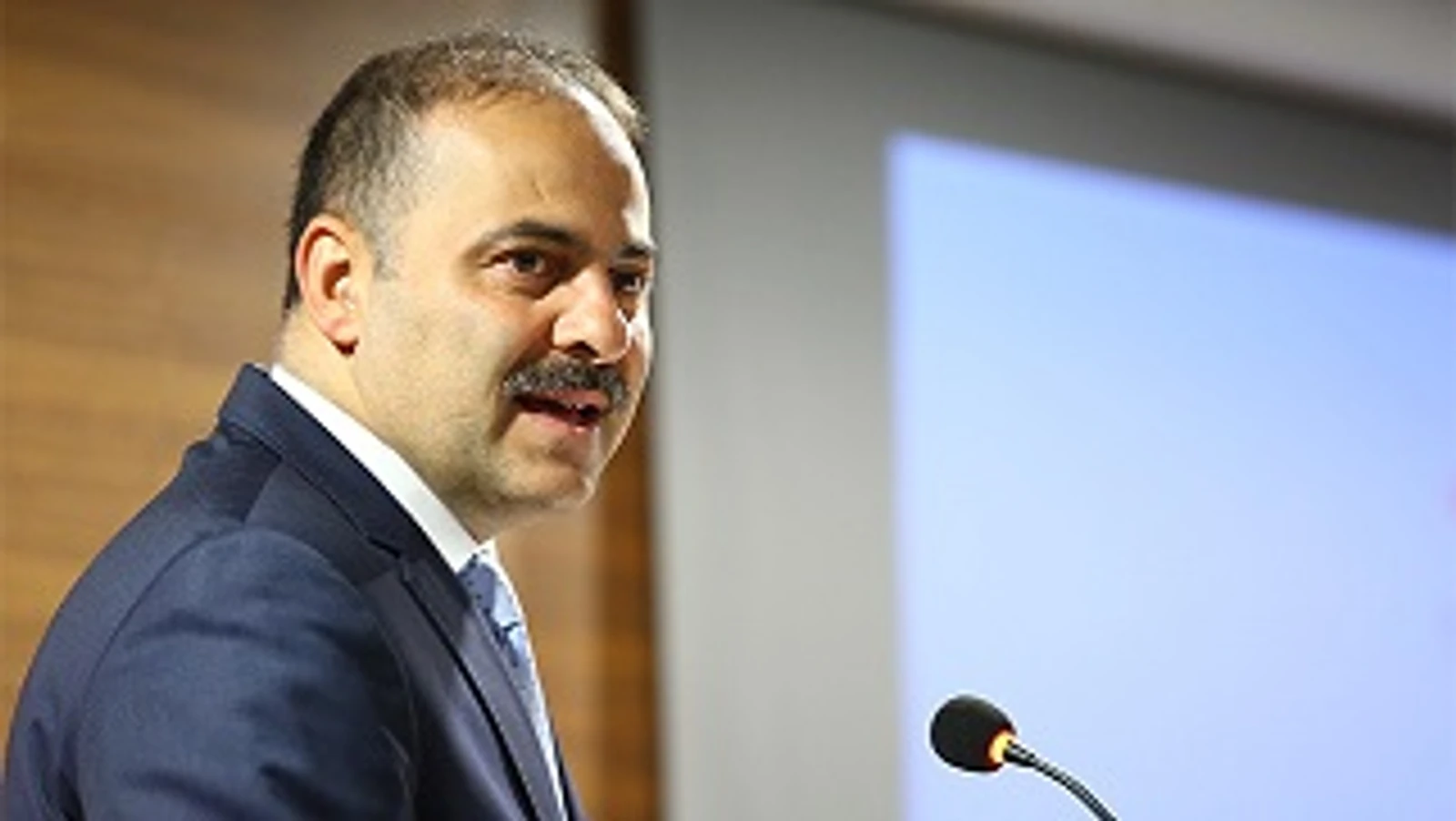
Dr. Ömer Fatih Sayan, President of the Information Technologies and Communication Authority (BTK), speaking at the Public Launch Meeting of the TÜBİSAD Information and Communication Technologies Sector 2016 Market Data Report, said, “We plan to become a country capable of conducting R&D and production first for 4.5G, and in the next step for 5G, and even exporting them.”
BTK President Dr. Ömer Fatih Sayan participated via video conference in the TÜBİSAD Information and Communication Technologies Sector 2016 Market Data Report Public Launch Meeting held in Istanbul and delivered a speech. The meeting was attended by Kübra Erman Karaca, Chair of the Board of the Informatics Industry Association (TÜBİSAD), along with many experts and sector representatives.
WE MUST BE A COUNTRY CAPABLE OF DOMESTIC AND NATIONAL PRODUCTION
Stating that ensuring the production of systems and devices used in the information and communication technologies sector with domestic and national resources is at the top of the issues they consider most important for the country, Sayan said, “It is not an acceptable practice that a significant portion of the systems and devices used in the sector are sourced from abroad and our country's resources are transferred abroad as a result. If we want to achieve our 2023 targets, we must reverse this situation, join hands, and build an economy based on strategic technology production. In this way, we can ensure that domestic resources do not leave our country, but foreign resources enter it. The main path to the success of this effort is not buying technology, but producing technology and exporting high value-added products. While doing this, we must not forget that the most important value added created by the information and communication technologies sector is its multiplier effect on economic growth, and every step we take will continue with increasing strength.”
WE PLAN TO BECOME A COUNTRY CONDUCTING R&D AND PRODUCTION, EVEN EXPORTING FOR 5G
Reminding that as BTK, they have imposed obligations on the operators they have authorized to use domestic resources to the maximum extent in their investments, Sayan said: “In the 4.5G authorization carried out by our Institution in 2015, we imposed obligations on the winning companies to meet a certain portion of their qualified expenditures related to hardware and software for the network and communication services from products manufactured by our SMEs in Turkey, and a certain portion from products with domestic goods certificates. Our base station produced in the ULAK project has reached a level usable in 4.5G commercial networks and orders have been received from operators. Additionally, under the tender by our Ministry of Transport, Maritime Affairs and Communication for the establishment and operation of mobile communication infrastructure in 1,472 settlements without mobile communication infrastructure, a certain rate of domestic usage requirement was also imposed for the mobile base stations to be established. With all these developments, we plan to become a country capable of conducting R&D and production first for 4.5G, and in the next step for 5G, and even exporting. In fact, if Turkey is to take its place in the world market, it will and must target not only the domestic market but also the external market under free market conditions, and do so with its own products and brands.”
INFORMATION AND COMMUNICATION TECHNOLOGIES ARE ESSENTIAL TO GAIN AN ADVANTAGE IN THE ECONOMIC RACE
Noting that the information and communication technologies sector plays an effective role in every area of social and professional life and forms the building blocks of the digital economy, Sayan said, “Today, communication networks have become a key technology that deeply affects not only society's daily life but also all sectors of the economy. Infrastructure sectors such as energy, gas, and water distribution networks, and sectors such as transportation, traffic, and health, which constitute the main needs of society, operate based on effective and reliable electronic communication infrastructure. Information and communication technologies are a sector that positively affects all industries in the economy and increases efficiency. Industry 4.0, cloud computing, big data, artificial intelligence, and autonomous systems are no longer the subject of a science fiction novel but have become the reality of our daily lives. It is clear that countries that can effectively and efficiently use information and communication technologies will gain an advantage in the economic race.”
51.7 MILLION SUBSCRIBERS USING 4.5G
Emphasizing that stakeholders' good understanding of the sector's current position is of great importance in determining the path we will take in the coming period, Sayan shared the following information: “In our latest report published in April last year, along with the last quarter data of 2016 and the overall picture of 2016 compared to 2015, we observe that growth in the electronic communications sector continued in terms of subscriber numbers, data traffic, revenues, and investments. Looking at the important data of our sector;
-The total net sales of operators in the sector increased by approximately 15% compared to the previous year, reaching 45.4 billion TL.
-The total investment made by our private sector in 2016 amounted to 7.4 billion TL.
-Mobile subscriber number exceeded 75 million. 51.7 million of these subscribers switched to the 4.5G service that started on April 1, 2016. The number of those actively using this service exceeded 19.2 million.
-The number of machine-to-machine (M2M) subscribers, expected to reach a large number in the near future, increased by 25% in 2016, exceeding 4 million.
-Broadband internet is spreading rapidly. It reached 62.2 million subscribers with a 28.1% increase compared to the previous year. 51.7 million of this figure are mobile subscribers. The number of subscribers receiving internet over fiber infrastructure also increased by 15% compared to the previous year, approaching 2 million.
-The faster mobile internet service achieved with 4.5G also increased usage. Monthly average mobile usage increased by 52% compared to 2015. Average monthly usage in fixed internet reached 66.5 GB.”
CYBER SECURITY IS IMPORTANT FOR THE HEALTHY GROWTH OF THE SECTOR
Reminding that the widespread use of the internet, the increase in e-commerce volume, and issues such as personal data security and consumer trust in online trading platforms are becoming increasingly important for achieving the targeted growth rates in the sector, Sayan said, “Cyber security, which has been on the agenda recently and which we as the Institution particularly emphasize, has become an important issue that should not be overlooked for the healthy growth of the sector. The rapid development of information and communication technologies and their integration into many aspects of our lives have also increased potential problems related to cyber security. Cyber security stands before us as an important problem that preoccupies individuals, institutions, states, and even the international community. The cyber environment, accepted as a battlefield separate from classical battlefields, requires different techniques from classical defense methods. A $10 malicious software can paralyze million-dollar systems. Measures to prevent cyber attacks through open doors and embedded systems will strengthen our hand. Cyber criminals, unlike traditional criminals, carry out their attacks more patiently and stealthily through timed and hard-to-detect malicious software.”
AS A COUNTRY, WE HAVE ENTERED A PERIOD TO REDUCE OUR DEPENDENCY
Stating that the monopolization of security solutions developed against threats is another problem that increases the dimension of the issue, Sayan said, “The gratifying aspect of the issue for us is that as a country, we have entered a period where efforts to break this monopoly and reduce our dependency are underway. For this reason, I think all countries and parties working on the said technology will show meticulous care during 5G studies. We need to accept that security is the most important component for both existing and developing technologies. While raising cooperation and coordination with the world to the highest level, we once again remember how important the domestic and national production of contents to be used especially in critical infrastructures is. In this context, as the regulatory authority of the information and communication sector, we continue our efforts to develop measures in the field of cyber security and to support the development of our sector with the contributions of all our stakeholders, including TÜBİSAD.”
Reminding that the “Information and Communication Technologies Sector Market Data Report” published annually by TÜBİSAD provides valuable resources for the public with its analyses on topics such as the size of the information and communication sector, employment potential, and export opportunities, Sayan concluded his speech by wishing the TÜBİSAD report to be beneficial for the sector.