




Havelsan BTK and Deep Learning Turkey Collaboration Organized Artificial Intelligence Conference.
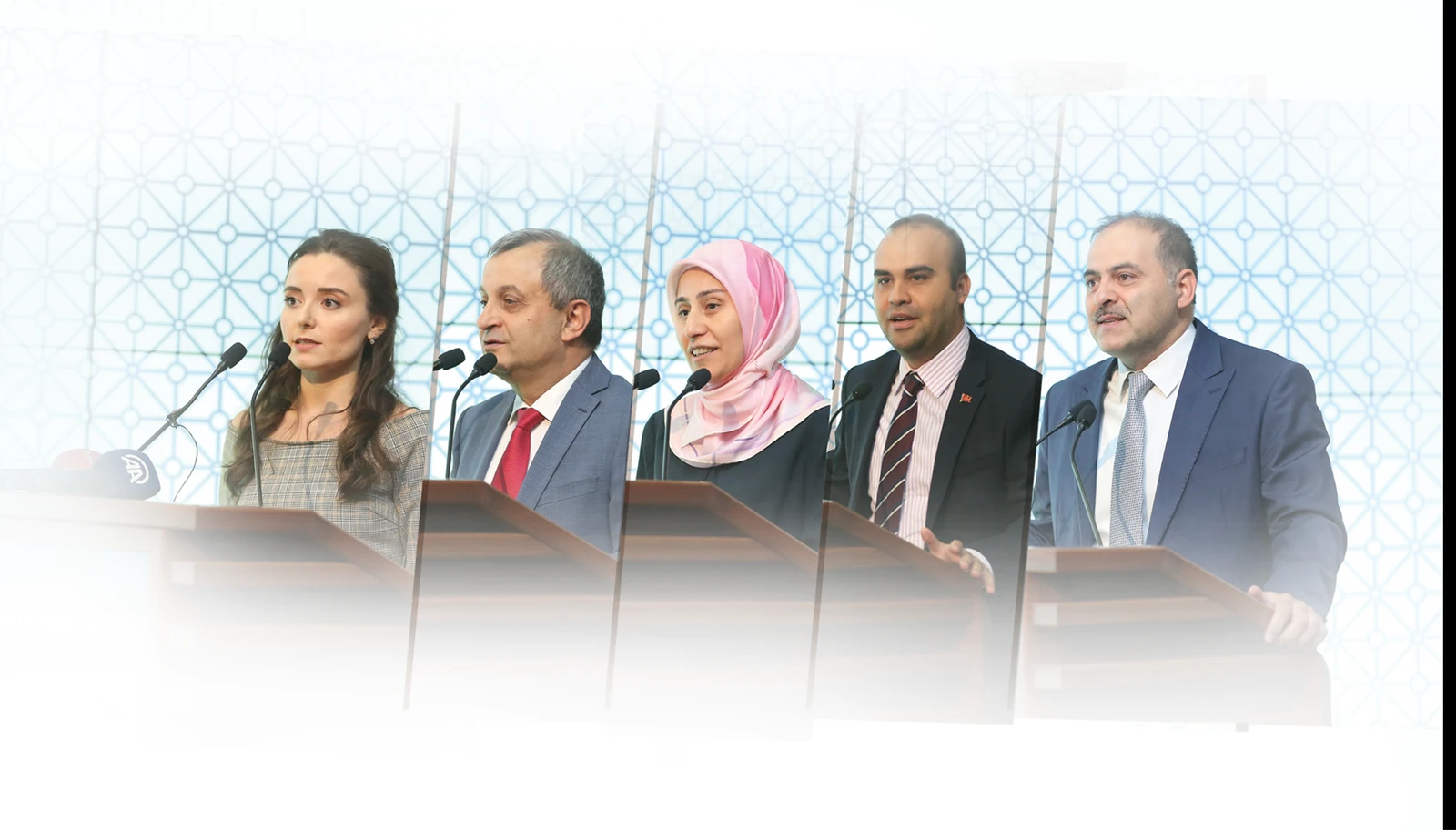
Information Technologies and Communication Authority hosted the program attended by Ministry of Transport and Infrastructure Deputy Minister Dr. Ömer Fatih Sayan, Ministry of Industry and Technology Deputy Minister Mehmet Fatih Kacır, Advisor to the Minister of National Education Assoc. Prof. Dr. Hilmi Çolakoğlu, BTK Second President Figen Kılıç, HAVELSAN General Manager Ahmet Hamdi Atalay, DeepCon Founder Merve Ayyüce Kızrak, industry representatives and students.
In the opening speech of the program, BTK Second President Figen Kılıç stated, "With the developments in information technologies, developments are also occurring in our daily lives. Technological developments make it mandatory to keep up with these changes. Along with these developments, the production, processing, storage of data and the transformation of this data into marketable information are of great importance. As you know, data is now the oil of our time. Countries that can process data, transform and market it are now stronger. Technology evolving with our lifestyle is making transformation and digitalization an indispensable part of our lives."
BTK President Kılıç: 5G is Just Around the Corner
Stating that 5G-related works will soon be in our country, Kılıç said, "As you know, we have started using 4.5G. 5G is just around the corner. Networks have started to be established. Tests and trials are ongoing. With 5G, topics such as the Internet of Things, machine learning, and artificial intelligence have started to gain much more importance in our lives. Previously, when we talked about the Internet of Things, now we have started talking about the Internet of Everything. With 5G, our lifestyle will change, professions will change, our education system will change, and we need to take our place in this digitalizing world. There were also topics related to digitalization in the 100-day action plan. In Turkey's 2023 vision, there are topic headings especially on digitalization. The Turkey roadmap prepared by our Ministry of Industry and Technology in previous years explains very well in which areas we need to plan. There is beautiful information that will particularly broaden your horizons, young people. Again, the establishment of the Digital Transformation Office in Turkey shows that these works are progressing much faster, strategically, and dynamically in our country. With the increasing e-government applications every day, innovations are also being brought to the relationship between the state and citizens."
Kılıç also spoke about Industry 4.0: "As you know, Industry 4.0 is entering our lives as a brand new field. It is advancing at an unprecedented speed in history. But we cannot limit Industry 4.0 to just production. The digitalization of all environmental factors and processes is now inevitable. Industry 4.0 will change both our work life and our ideas. Today, multidisciplinary professions are emerging. In most parts of the world, strategies for these professions have started to be discussed. With Industry 4.0, robots are entering our lives. Robots will accelerate business processes, but it is certain that they cannot be as creative as humans."
Emphasizing that the works carried out today are independent of time and place, Kılıç said, "For us to move together with the world, you young people need to develop yourselves in multiple fields. As BTK, we follow technology and try to use it. Along with this, we also follow our main duties such as regulations. We constantly follow regulations especially on machine learning, artificial intelligence, and personal data privacy. With algorithm ethics, new questions are coming to the agenda. It seems that with new technologies, social impacts and ethics will be among the most discussed topics. As institutions and operators we work with, our mission is this: Turkey's data must stay in Turkey. And we can achieve this by transforming this data into information," she stated.
Deputy Minister Kacır: National Technology Initiative is a Must for Our Country
Ministry of Industry and Technology Deputy Minister Mehmet Fatih Kacır also said in his speech, "It is promising for our country that our young people are interested in these fields while still university students and are actively engaged with these topics. As the Ministry, we interpret and evaluate artificial intelligence and many technologies discussed today within the national technology initiative. The national technology initiative is the name of a framework that is indispensable for our country's development and achieving its goals. In this direction, two things are very important for us: The national technology initiative should definitely mean developing and producing high-tech products nationally and originally, especially products of strategic importance for our independence. From another perspective, it is to carry out works to bring us forward in global competition, increase our economic score, and thus raise the voice of global justice that we are raising in the world, led by our President, and to defend the rights of all the oppressed in the world, and this is the name of the national technology initiative."
Deputy Minister Sayan: We Are Working to Establish the "CERN" of Artificial Intelligence
Defining artificial intelligence as the ability of machines to perform thinking, perceiving, learning, problem-solving, and decision-making tasks, Deputy Minister Dr. Ömer Fatih Sayan said, "We are witnessing that artificial intelligence, designed as a technology that can imitate human intelligence, is being interpreted beyond its current definition. Today, instead of standalone software, there are software that act like seeing eyes, hearing ears, and touching organs. Advances in data collection, data processing, and data computing power (M2M and IoT) are significantly increasing the capabilities of artificial intelligence."
Sayan listed the sectors that will benefit the most from artificial intelligence in solving societal needs as follows: "Providing and increasing quality health services, increasing agricultural income and efficiency and reducing waste, facilitating access to education and increasing its quality, smarter and safer transportation vehicles, better traffic, and fewer traffic problems."
Emphasizing the need to address obstacles and challenges to fully evaluate the gains obtained or obtainable with artificial intelligence, Sayan listed the problems as follows: "Lack of expertise in artificial intelligence research and application, lack of data ecosystem interaction - access to smart data, high resource cost and low awareness for adoption of artificial intelligence, lack of collaborative approach for adoption and implementation of artificial intelligence. Absence of regulations on data anonymization."
Stating that works on data generalization and establishing laboratory environments are ongoing, Sayan said, "The foundation of leading in developing technologies lies in superior research capabilities. Effectively realizing this capability requires a qualified human resource profile in both basic and applied research. As the Ministry, we have the necessary awareness and perspective on increasing research competencies, examining global progress, and encouraging international cooperation. Together with our expert teams, we follow 'instant research projects', and we attach importance to developing common computing infrastructures to establish the 'CERN' of artificial intelligence."
Drawing attention to the human resource need, Sayan said, "There is a need for human resources who know the unknown, are well-intentioned but skilled, sincere but sufficient, loyal but successful. As the Ministry, for the adoption of a highly collaborative technology like artificial intelligence, we will undertake a catalyst role by providing support, access to infrastructure, encouraging innovations through research, and offering solutions for various public needs. The AVCI application developed by USOM is a product entirely written by our software department with internal resources. It has provided the necessary and sufficient impact that would be equivalent to 60-70 hackers, and it constitutes a clear example of machine learning and deep learning applications. As these solutions and technologies permeate our way of life and doing business, problems related to ethics, privacy, and security will also emerge. We must think about most of the discussions on ethical evaluations of artificial intelligence in terms of fairness, accountability, and transparency derivatives. We will be active with our regulatory and supervisory role in ensuring that artificial intelligence technologies and products are developed in compliance with standards."
Emphasizing the necessity of putting forward a solid idea for artificial intelligence to move in sync with the "global wave of innovation," Sayan said, "Online devices like IoT devices are increasing exponentially. I know that BTK is accelerating the works it should do in this regard. The artificial intelligence ecosystem is developing rapidly and directing societies to unknown territories, while our strategy aims to direct an inevitable wave of change for faster and stronger impact. Artificial intelligence is the greatest single technological revolution of our time, with the potential to disrupt or change all aspects of humanity. The transformative impact of artificial intelligence will be much greater than the transformative impact of electricity, which has a 120-year history."