




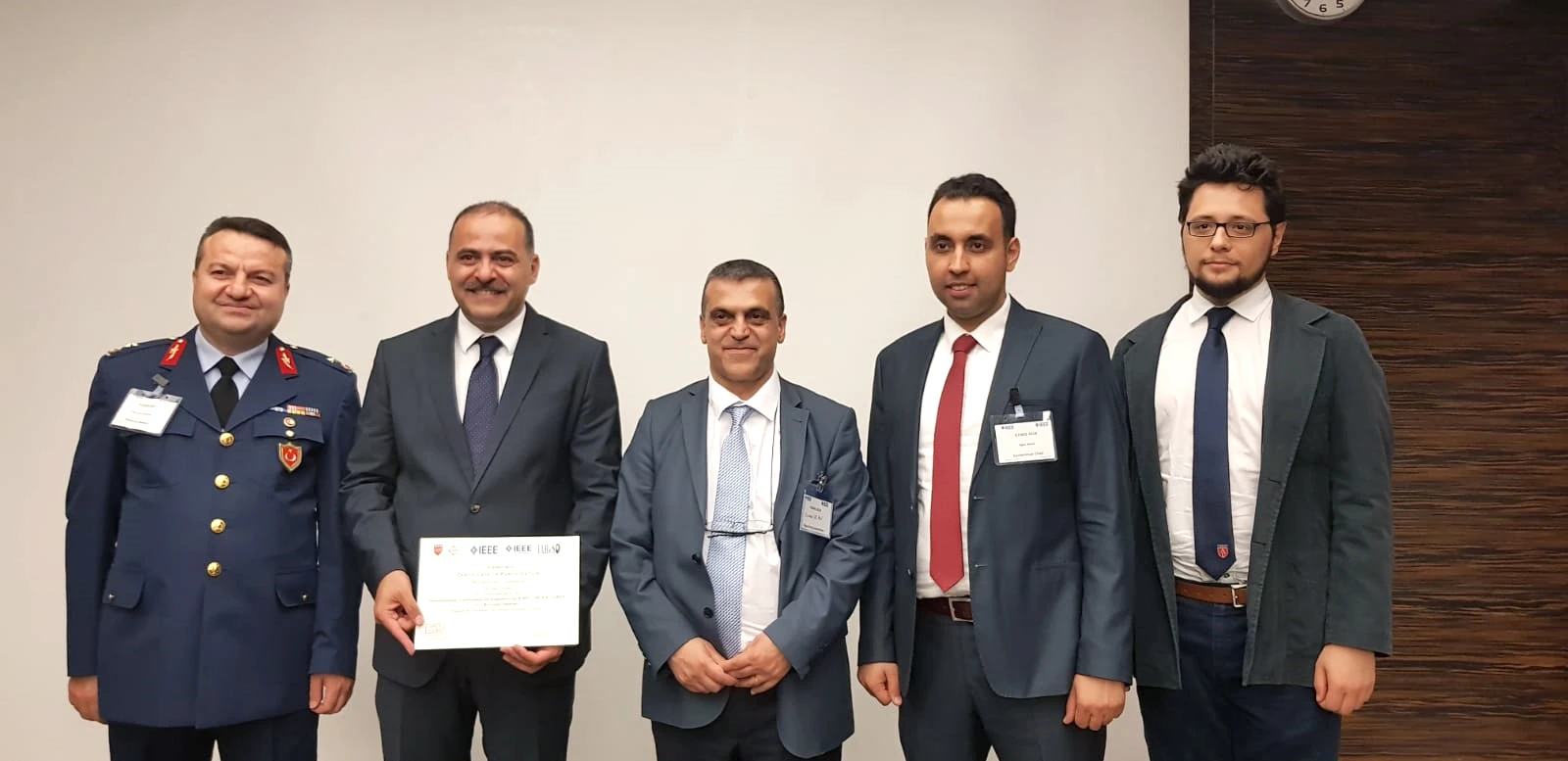
The International Engineering and MIS 2018 Conference and the International Engineering and Computer Workshop were held in Istanbul. BTK President Dr. Ömer Fatih Sayan, who participated in the program, spoke about the importance of 5G.
The International Engineering and MIS 2018 Conference and the International Engineering and Computer Workshop, organized with the contributions of Altınbaş University, hosted its guests in Istanbul. Dr. Ömer Fatih Sayan, President of the Information Technologies and Communication Authority, who attended as a speaker, began his speech by saying, “We are at the threshold of a serious distinction from traditional mobile communication to innovative futuristic technologies. 5G and beyond next-generation mobile communication technologies will first transform the communication sector and then shape all vertical sectors such as energy, manufacturing, health, automotive, transportation, and finance.”
Reminding that 3G mobile communication technologies enabled high data usage following the increase in mobile penetration rates with 2G technologies and mobile phones, Sayan stated, “Currently, one-third of the world's 7.2 billion population uses 4G technologies. In the future, 5G will have features that will change the paradigms of both communication and other sectors. With 5G, not only people but everything from the largest to the smallest will communicate with each other. It is estimated that by 2025, there will be 100 billion different communications worldwide, and only 10% of them will be personal. To prepare for this new era, public authorities, the private sector, and the academic community have different and complementary roles. In addition to the 4G systems currently in use, standardization efforts for fifth-generation (5G) mobile communication technologies expected to enter the market in 2020 are ongoing. For this purpose, 3GPP approved the independent 5G New Radio specification. The non-standalone (NSA) version of the standard was accepted in December 2017. While the NSA part of the standard benefits from the LTE core network, the SA part will be deployed independently.”
Expressing that 5G technology will play an important role in strengthening socio-economic transformations by triggering innovation in vertical sectors using the communication sector and communication technology infrastructure, thereby increasing efficiency, sustainability, and overall welfare, Sayan said, “5G will bring much more by complementing what has been achieved with the evolution of LTE and adding some radical new capabilities. 5G will have social change potential. 5G basically covers three main items: enhanced mobile broadband (eMBB), ultra-reliable low-latency communication (URLLC), and massive machine-type communications (mMTC). With high data rates, very low latency, higher data capacity, energy and cost efficiency, it is foreseen that 5G will enable significant changes in sectors such as energy, automotive, health, transportation and logistics, environment and agriculture, media and entertainment. On the other hand, significant changes are expected in the core network and physical network with 5G. Operators have accelerated their efforts to make their networks software and virtual-based. SDN/NFV applications and virtual network functions play a very important role in this context. Millimeter waves, network slicing, massive MIMO, and other infrastructure applications also constitute very important topics. These technologies will meet the requirements of 5G.”
There Are Intensive Studies on 5G in the World
Sharing the information that the BTK has prepared the "5G and Vertical Sectors Report," Sayan stated, “There are intensive studies on 5G and beyond technologies worldwide. The 5GTR Forum has been established to conduct studies with stakeholders in the ecosystem through national and international public-industry-academia collaboration to develop high value-added products, services, and technologies that will take place in the world market with domestic and national means in next-generation mobile communication systems such as 5G and beyond. To ensure that the 5GTR Forum studies progress efficiently in a short time; under the 5GTR Forum organizational structure, working groups for Core Network, Physical Network, Service and Application, and Standardization have been established, and 15 sub-working groups have been set up under these four working groups, and they have started their activities. From these working groups, a white paper containing priorities and roadmaps for our country in 5G and beyond is being prepared and is currently nearing completion. Subsequently, it is aimed to produce projects on priority issues in our country according to the priorities and roadmap to be determined in the white paper.”
Emphasizing that they attach great importance to international collaborations, President Sayan added: “Within the framework of international collaborations, at the 4th Global 5G Event held in Seoul, two separate Memorandums of Understanding were signed on November 23, 2017, between the 5GTR Forum and the 5G Forum Korea, and between the 5GTR Forum and Japan 5GMF, towards the goal of developing external relations with organizations equivalent to the 5GTR Forum. With this collaboration agreement made with the 5G Forums of Korea and Japan, which are among the most ambitious countries in 5G and beyond technologies, it is evaluated that strengthening the relations between the 5GTR Forum and the relevant platforms will be beneficial in terms of developing 5G and Beyond studies conducted in our country and keeping abreast of developments in the world, and it is expected that the way will be paved for collaborations between universities, operators, and manufacturers in our country and in Korea and Japan.”
Speaking about the "5G Valley Open Test Field," another important project for 5G, President Sayan said, “With the 5G Valley Open Test Field Project conducted under the coordination of BTK, an environment is aimed to be created where universities, research centers, companies, and startups can test applications and technologies related to 5G and Beyond and create added value in the region covering the campuses of METU, Bilkent, Hacettepe Universities and the BTK Main Building. The 5G Valley Open Test Field Collaboration Protocol was signed on August 15, 2017, by the Information Technologies and Communication Authority, Hacettepe University, İhsan Doğramacı Bilkent University, Middle East Technical University, Avea İletişim Hizmetleri A.Ş., Turkcell İletişim Hizmetleri A.Ş., and Vodafone Telekomünikasyon A.Ş. during the BTK 17th Anniversary Events.”
In the 5G Valley, it is planned to establish an infrastructure where R&D, prototyping, and testing of 5G and Beyond technologies will be conducted through the collaboration of BTK, universities, and operators, and the 5G Valley Executive Board, consisting of representatives of the protocol parties, has started its work in this context. Regarding the establishment of the 5G Test Network Infrastructure, various meetings have been held with the protocol parties and relevant institutions and organizations on the actions that can be taken for the sub-components of the network in the physical network, core network, service, and application areas. Additionally, in the 5G Valley Open Test Field, to contribute to the training of qualified human resources needed by our country in the short, medium, and long term in 5G and Beyond subjects, a protocol was signed on May 24, 2018, with the 5G Valley parties for the establishment of an interdisciplinary “5G and Beyond Joint Graduate Support Program” with universities. The program aims to create sustainable competence in advanced communication technologies and produce outputs in various forms such as patents, projects, articles, and spin-off companies through thesis studies. On the other hand, we aim to implement a similar project in Istanbul as well,” he concluded his speech.